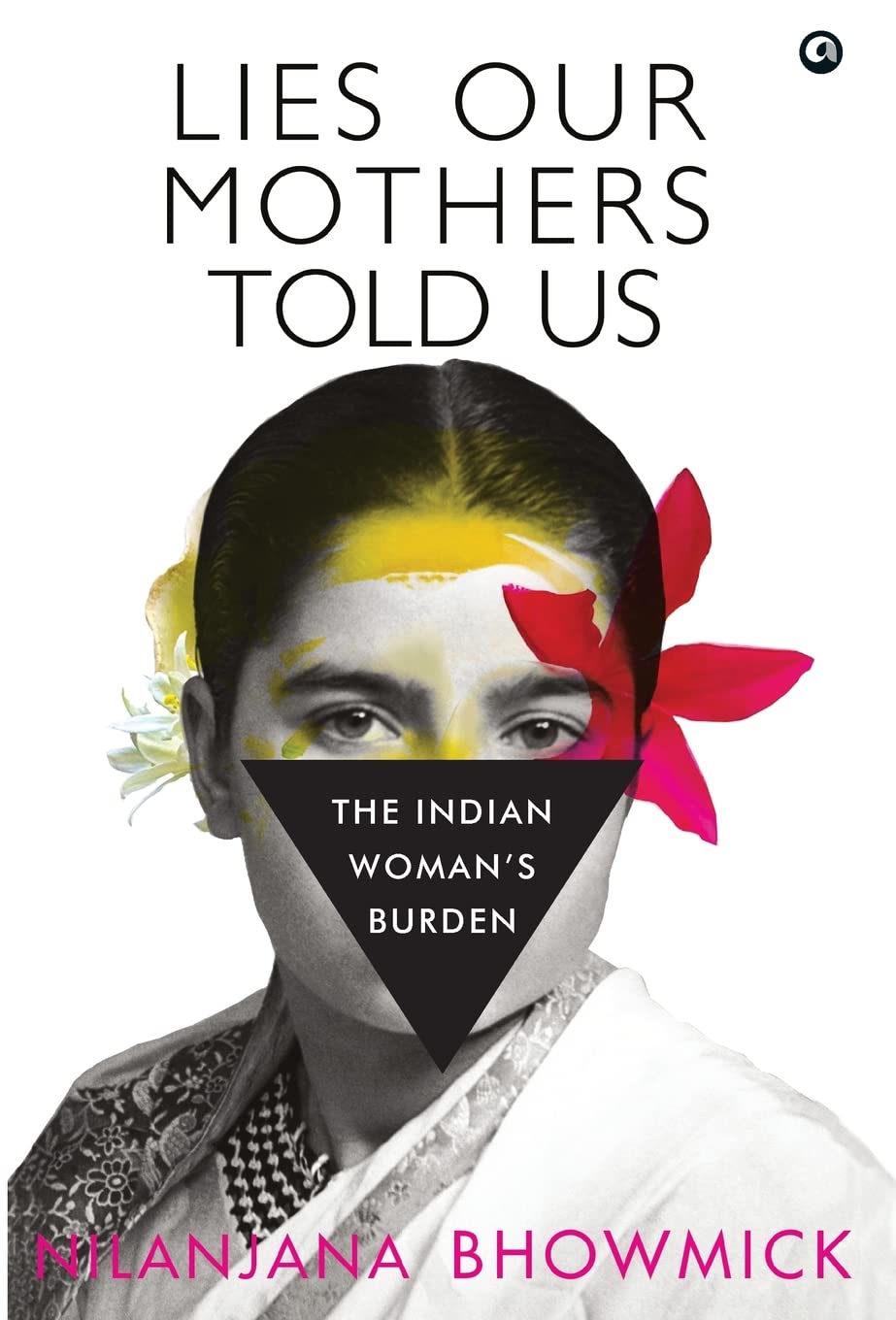
Lies Our Mothers Told Us By Nilanjana Bhowmick
Lies Our Mothers Told Us By Nilanjana Bhowmick
Couldn't load pickup availability
Description
Lies Our Mothers Told Us: The Indian Woman’s Burden (Aleph Book Company, 2022)
In this book, Nilanjana Bhowmick explores the structural constraints that impede empowerment and gender equality for middle-class women in India, weaving together personal stories and journalistic investigation.
Core Argument
The book examines how middle-class families have mastered the art of simulating an environment of empowerment in their homes, even as women continue to face subjugation and are pressured into conforming to outdated norms. Bhowmick asks whether, in a patriarchal society, the assertion that “women can have it all” comes at too high a price.
Key Themes
∙ The Double Shift: The “double shift” refers to how women fulfill traditional housework and caregiving responsibilities alongside their professional commitments — and coupled with the “superwoman syndrome,” the modern Indian woman’s struggle remains largely invisible.
∙ Mental Health: The book explores generational struggles with mental health, societal expectations, and domestic abuse, highlighting alarming rates of suicide among housewives and the lack of support for women facing domestic violence.
∙ Caste and Class: Bhowmick also highlights how the caste factor further deepens the gender gap in India.
∙ Generational Transmission: Women are caught in a toxic cycle, expected to outperform themselves on every front while paying little attention to their own mental, emotional, and professional development — and unpaid domestic work is shown to be a generational, not merely individual, phenomenon.
About the Author
Nilanjana Bhowmick has been a journalist for more than twenty-one years and has won three international awards for her reports on gender and development.
Critical Reception
The book provides several “a-ha” moments through the striking similarity of patterns across space and time, and effectively connects readers with the women whose experiences Bhowmick documents — functioning as a space where women feel heard. A noted criticism is that while it diagnoses the problem compellingly, it offers relatively few pathways forward or solutions.
It’s a work of narrative journalism and social analysis, comparable in spirit to books like Men Don’t Try or The Second Sex — but grounded specifically in the Indian middle-class experience.
Share